Build a clearer customer system for your business
Clarify customer acquisition, follow-up, appointment flow, CRM structure, responsibility structure, and operational logic — so growth becomes more stable, less manual, and easier to scale.
Not more tools. Better structure.
The goal is to make website, forms, scheduling, chat, CRM, and workflow actually work together — with clear responsibility points and better judgment boundaries.
Many businesses do not lack tools. They lack workflow clarity, ownership clarity, responsibility structure, and judgment stability.
Services
Think of this as business system design for companies that want clearer customer flow, better coordination, stronger responsibility structure, and more stable operations.
Customer acquisition flow
Turn the website into a clearer business entry point that can receive, screen, and move customers forward.
- Form design
- Inquiry entry structure
- Conversion path optimization
CRM and follow-up structure
Organize customer information scattered across email, chat, forms, and spreadsheets into a usable workflow.
- CRM logic design
- Follow-up structure
- Status management recommendations
Operational workflow clarity
Reduce repeated communication, unclear handoffs, and temporary fixes so the team can stay stable as operations grow.
- Workflow mapping
- Automation recommendations
- Key judgment points
Modules
Detailed content is organized in tabs to keep the interface clean.
Customer acquisition system
Upgrade the website from looking good to actually receiving customer demand.
Follow-up and CRM structure
Keep customer stages visible instead of letting communication drift across tools.
Appointment and service flow
Reduce manual scheduling overhead and create a smoother intake-to-service process.
Lead intake
Response support
Scheduling flow
Knowledge support
Lead collection and organization
Customer follow-up records
Workflow visibility
SMB AI workflow setup
Lead management structure
Digital workflow optimization
System blueprint
Automation recommendations
Operational improvement direction
What usually makes sense first
- Clarify the customer path first
- Unify inquiry, booking, follow-up, and customer records
- Separate judgment-required work from automation-ready work
What is usually not a good first step
- Adding heavy automation before the workflow is clear
- Buying more tools before operating logic is stable
- Scaling outreach while intake and responsibility are still unclear
Research foundation
This work is grounded in enterprise transformation, AI governance, decision architecture, human judgment, and complex systems thinking.
Research focus
The key challenge is not only speed, but workflow clarity, responsibility clarity, judgment stability, and better automation boundaries.
Research attribution
Research foundation developed through independent interdisciplinary research by Xufen Tu.
Practical orientation
This platform translates structural research into usable business system design for customer flow, CRM logic, responsibility structure, and workflow optimization.
Enterprise AI governance framework
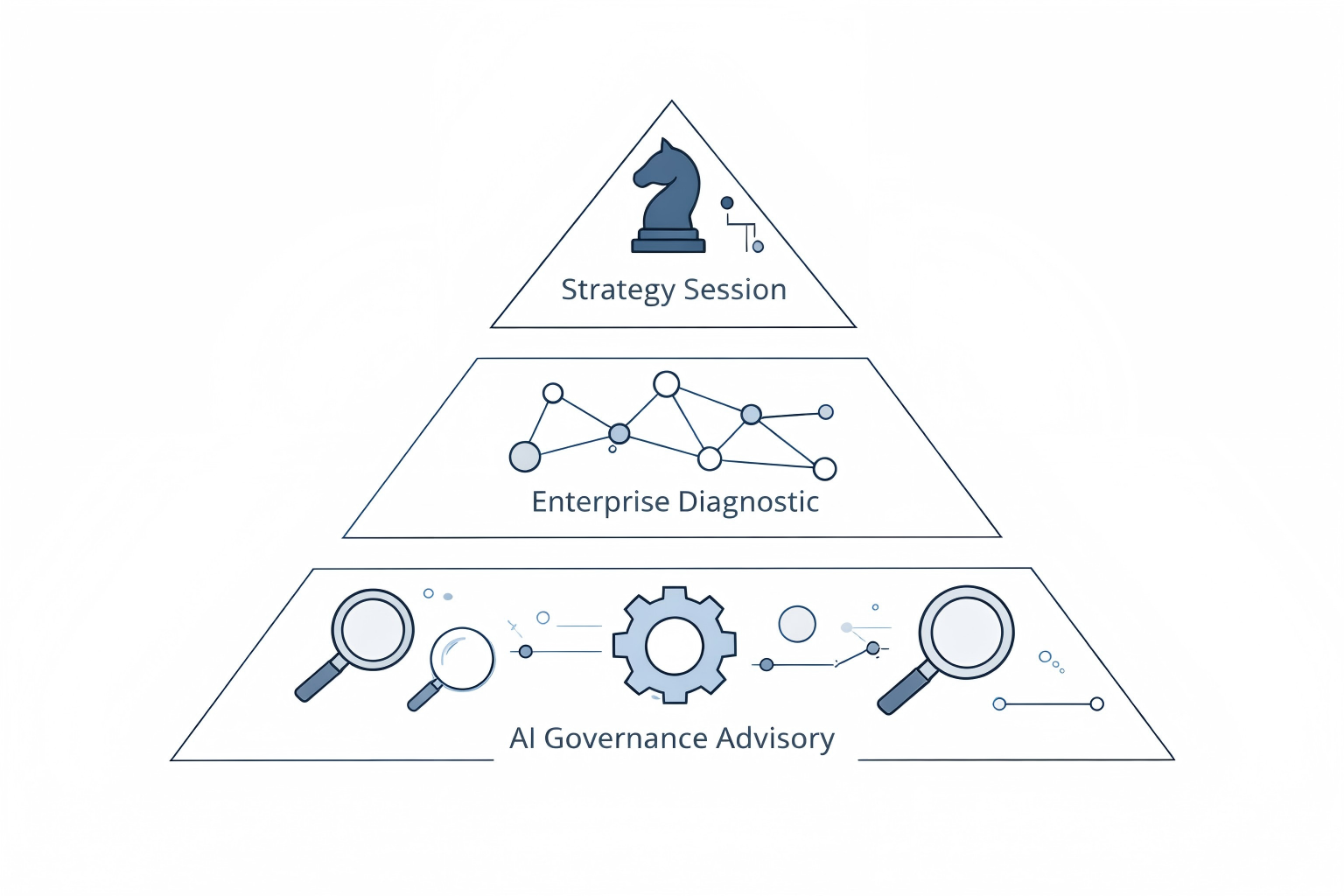
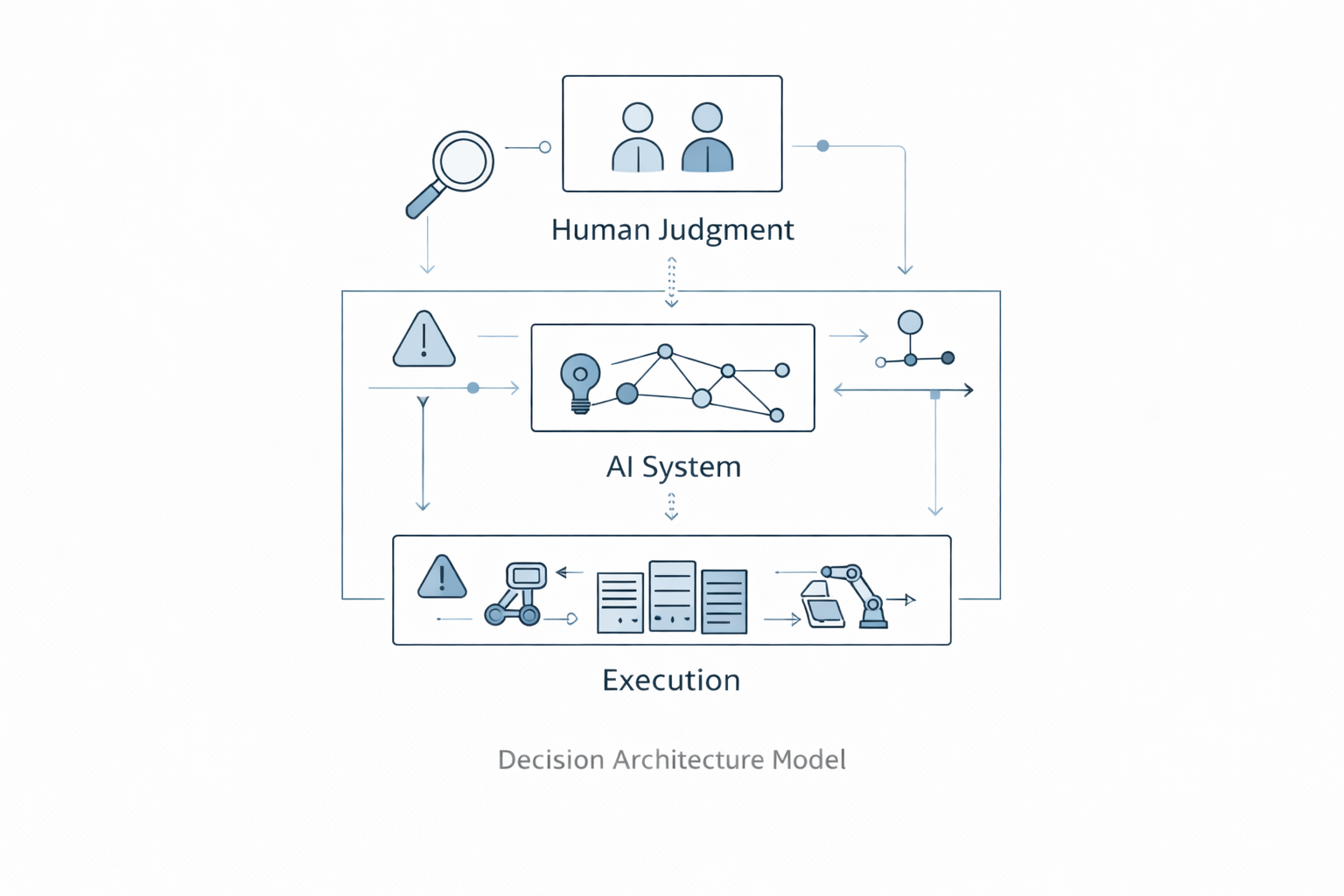
Decision architecture model
Assessment
A simplified readiness assessment for founders and teams who want a quick view of where their system stands — not only in automation, but in clarity, responsibility, and judgment stability.
Process
The goal is not to force clients to learn more language first, but to see where the real bottleneck is and what should remain human-led.
Clarify the bottleneck
Assess flow and structure
Design a grounded path
Implement and refine
Operational insights
Why businesses can still feel chaotic even with more tools
Because the real missing layer is often not software, but workflow clarity, ownership, responsibility structure, and decision architecture.
Why automation should not be the first move everywhere
If the underlying process is unclear, automation usually amplifies confusion. It speeds up motion, but not necessarily good judgment.
Why customer management shapes growth efficiency
The key difference is whether the path from inquiry to service is designed clearly enough — and whether each stage has a visible owner.
Why responsibility structure matters before scaling
When businesses grow faster than their responsibility structure, teams start repeating work, dropping handoffs, and relying on memory instead of system logic.
Why human judgment nodes still matter in business systems
Not every step should be automated. High-value exceptions, sensitive customer situations, prioritization decisions, and final responsibility checkpoints still need visible human judgment.
FAQ
Is this a software product?
No. This is a business system design and optimization service. It helps clarify how your existing tools and processes should work together.
Do I need to already use AI tools?
Not necessarily. Many improvements come from clarifying workflow and responsibility structure first.
What kind of companies is this suitable for?
Small to medium businesses, growing teams, or companies experiencing operational complexity.
Is this consulting or implementation?
Primarily structure and system design. Implementation guidance can be included depending on the project.
Contact
If you'd like to explore how this can apply to your business, you can start with a short call.
Legal
This website presents business system design and research-based insights.
Content does not constitute legal, financial, or medical advice.
Implementation decisions remain the responsibility of the client.